Julie Rofman: Weaving Art Into Wearable Poetry
Julie
Rofman
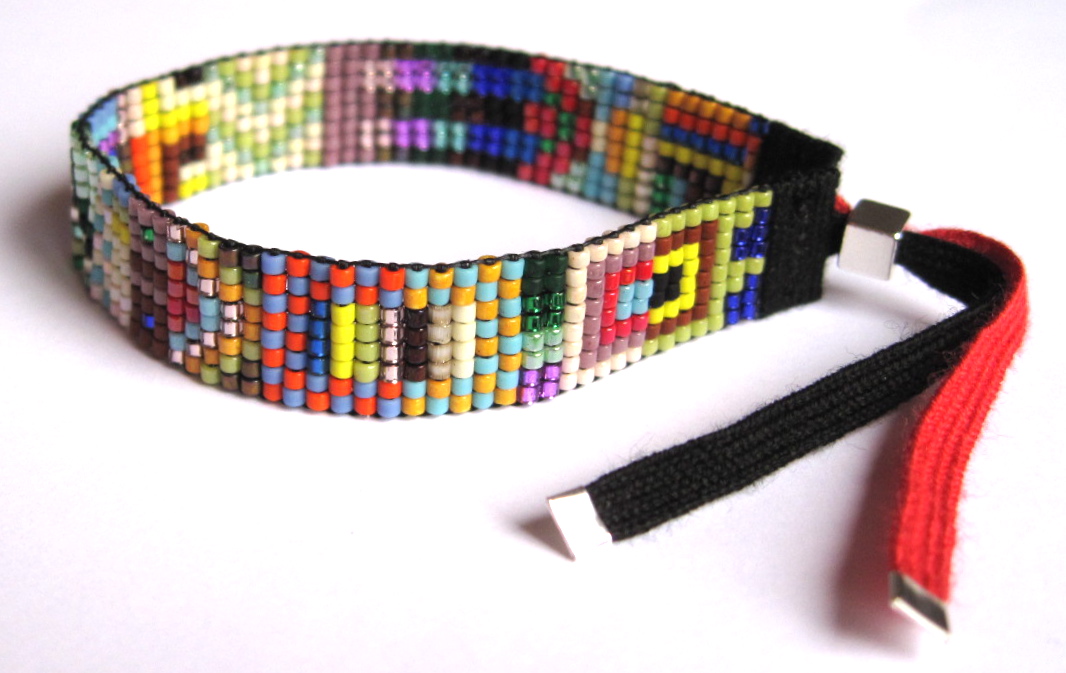
Thousands of Japanese delica beads, woven bead by bead, week by week. No two pieces identical. No pattern pre-planned. Art for the wrist.

From abstract canvas to beaded cuff, from Barney's New York to Tomorrowland Tokyo. Julie Rofman on the meditation of the bead loom, the grandmother who dressed like her art, and why she never pre-plans a pattern.
"I never pre-plan a pattern. I just kind of work intuitively with each section, having a rough idea of what will come next. Each bead tells me where to go next."
Julie Rofman's background is in painting and sculpture. About ten years into her career, during what she describes as a break from that kind of creating, she picked up a bead loom. She was drawn immediately to the preciseness of it and to the extraordinary range of color available in Japanese delica beads. What started as a diversion quietly became a second practice of equal depth.
Each cuff is woven on a small loom, bead by bead, taking anywhere from two hours to two days depending on scale. She works intuitively throughout. "I think this is what makes it most enjoyable, the decisions arise throughout the process. I like seeing how matte beads interact with sparkly beads and the interaction of bold and muted colors." The process has strong parallels with how she paints and draws. The loom is just a different kind of canvas.


"I treat wrists like miniature canvases. Photos don't capture how they catch light like shattered stained glass."
Julie Rofman
Hokusai
Paul Klee
Tanguy · Gorky
Her grandmother
"The first person I go to for fashion advice is my friend Kimball Hastings. The first time we met was in the elevator of our dormitory freshman year of college. He was wearing Gucci black and white leopard print pants and sunglasses at night. He happens to be the director of celebrity styling for Ralph Lauren now."
We have been a part of this change, using social media to expose the works of some of the most inspiring artists in the world and putting you, the reader, in touch with them directly. There is no need for only a few people in a flawed system to dictate what artists can and cannot be exposed to. Today it is more important than ever to preserve the artist's perspective. Because artists are. ✦